|
Two Myths about World Showcase at Epcot |
||
 |
|||
|
Epcot’s World Showcase has woken up. Norway expanded in 2016. A new ride, Remy’s Ratatouille Adventure, will open in 2021 at the France Pavilion. However, Disney hasn’t added a completely new country to World Showcase at Epcot since Norway in 1988—that was 32 years ago. Online, two reasons are mentioned over and over. What’s the real story?
|
|||
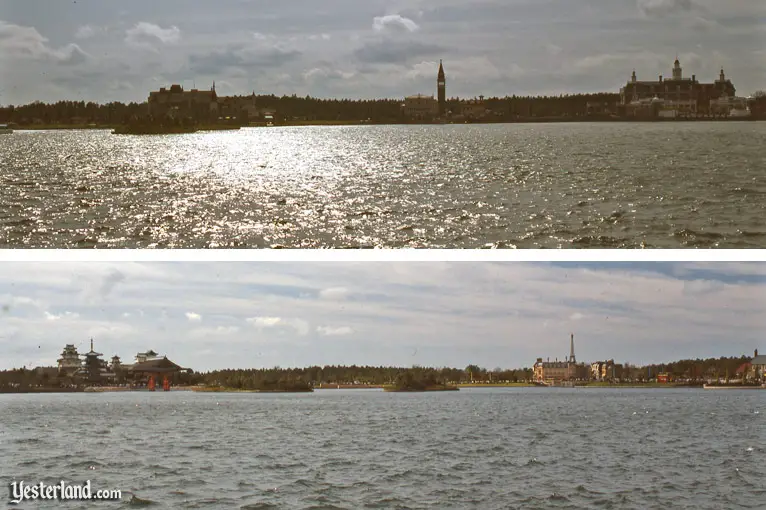
Photos by Werner Weiss, 1983 World Showcase Lagoon in 1983, before the Morocco Pavilion and the Walt Disney World Swan and Dolphin Resort |
|||
|
The Claim: “Disney can’t add any more countries to World Showcase at Epcot because there isn’t any more room.”
Status: False
The Claim: “Each of the World Showcase pavilions was paid for by a national government. Any new countries would also have to be paid for by a national government.” Status: False |
|||
|
|
|||
|
As you walk around World Showcase, there are no gaping vacant lots or long stretches of plywood walls. But that doesn’t mean World Showcase is full. There are still five available expansion sites, or seven if you remove the World ShowPlace pavilion, the former Millennium Village structure. If you include the spaces on either side of The American Adventure, there are two more. |
|||
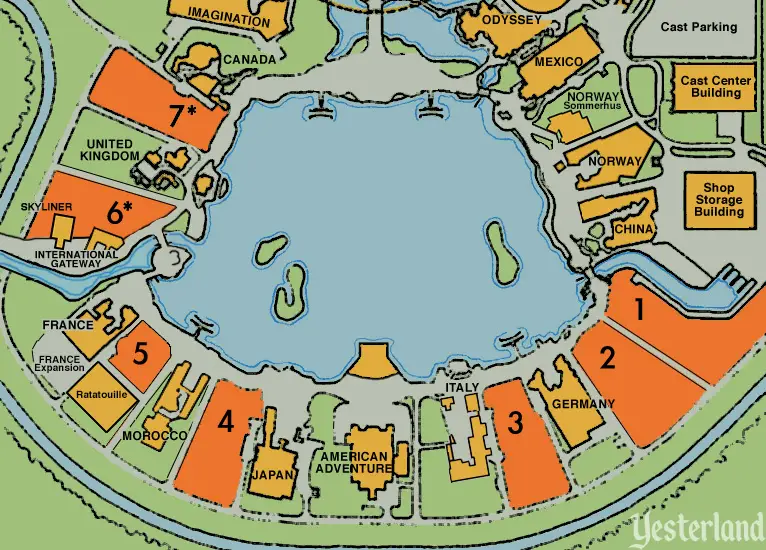
Map 2010-2020 by Werner Weiss, using several sources as basis. Five expansion sites—and two more (marked with asterisks) currently occupied by World ShowPlace |
|||
|
World Showcase was designed with ten pavilion sites on each side of The American Adventure—21 sites in total. The map shows nine on each side—19 in total. The massive American Adventure Pavilion, which uses a reverse forced perspective to look smaller than it actually is, is so different in scale from the international villages that it needs space around it. |
|||
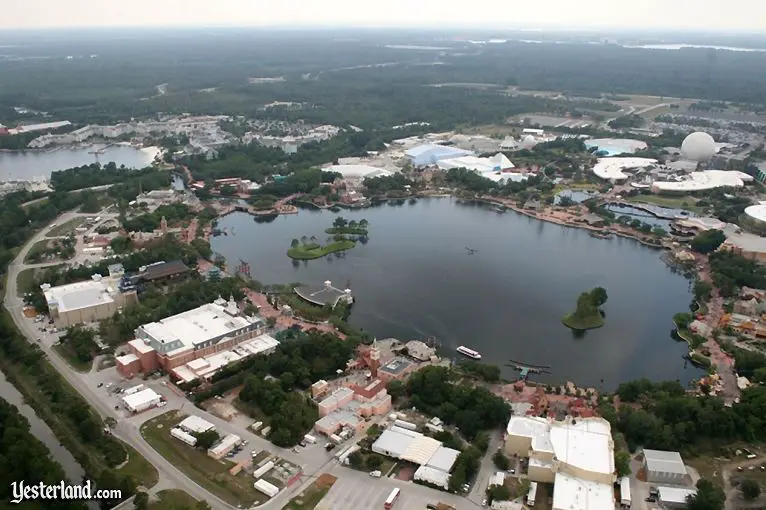
Photo by Anthony Ballesteros, 2008 Helicopter view of World Showcase |
|||
|
Just because the map shows a site as available doesn’t mean it’s completely empty. It you look at World Showcase from above on aerial photos, Google Maps, Google Earth, or Bing, you’ll see numerous backstage sheds of various sizes—and plenty of large trees. But that doesn’t make these sites unusable. |
|||
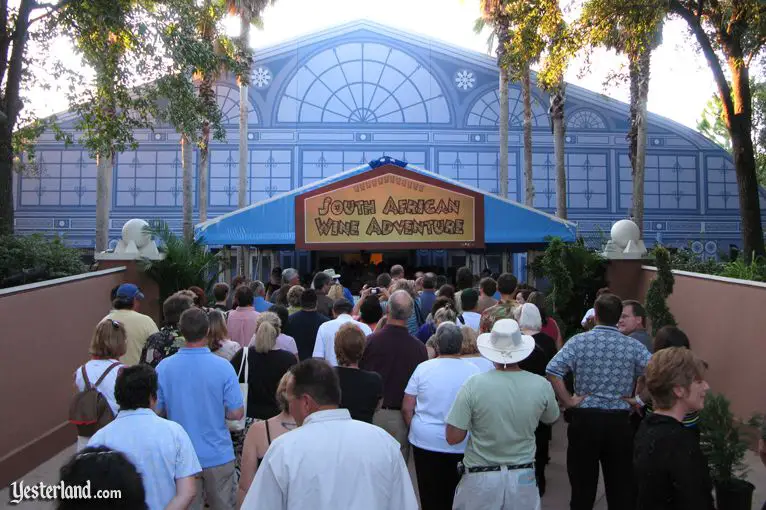
Photo by Werner Weiss, 2007 World ShowPlace pavilion, a space for private functions and Epcot Food & Wine Festival events |
|||
|
Site 7 on the map is the entrance to the World ShowPlace pavilion, which stretches behind the United Kingdom Pavilion, pushing access roads into site 6. From October 1, 1999 through January 1, 2001, it was Millennium Village, the focal point of Epcot’s Millennium Celebration. The pavilion is essentially a big tent. It was put up quickly, and there’s no reason that it can’t come down quickly—except that it presumably makes money for Disney in its current form. Disney promotes the 40,000 square-foot function space as “the world’s largest indoor group facility located within a Theme Park.” It’s used for “exhibitions, trade shows, receptions, banquets, conferences and meetings of virtually any size and shape.” The World ShowPlace pavilion is out of place between the beautifully designed pavilions of World Showcase. |
|||
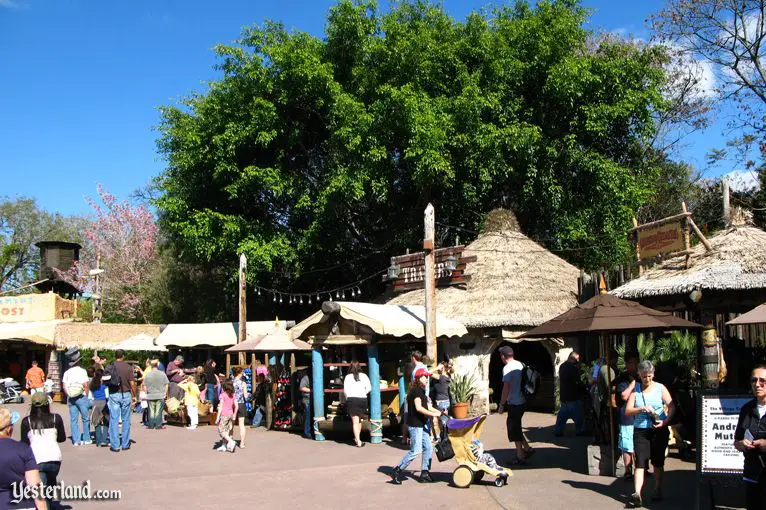
Photo by Werner Weiss, 2009 The Outpost (site 1 on the map) helps to fill the double site between China and Germany. |
|||
|
There’s enough room for two pavilions between China and Germany. Today’s Epcot Guidemaps identify this area as the Outpost, but the site just across the canal from China was originally going to be an elaborate pavilion about Equatorial Africa. |
|||
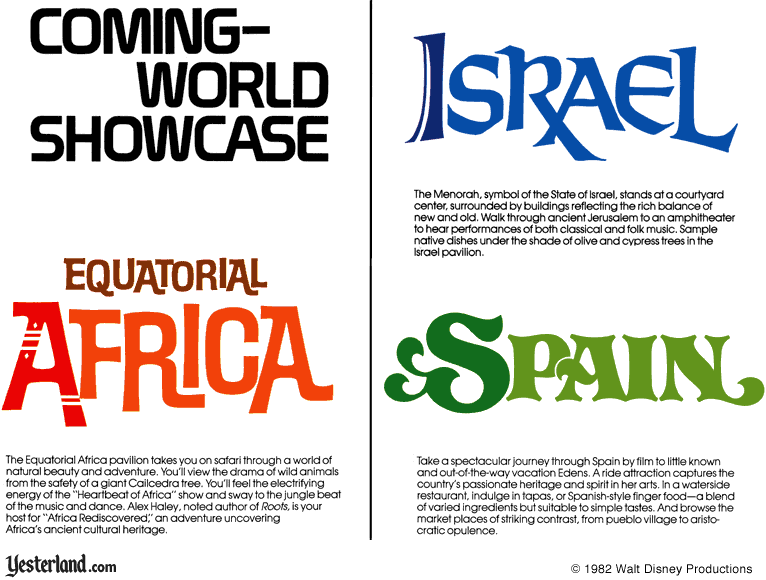
Logos from EPCOT Center: A Pictorial Souvenir © 1982 Disney The book EPCOT Center: A Pictorial Souvenir (1982) described three new pavilions. |
|||
|
Early visitors to EPCOT Center encountered signs around World Showcase showing where three new pavilions would be built. Not only were all three eventually canceled, but only two permanent pavilions for countries were ever added. |
|||
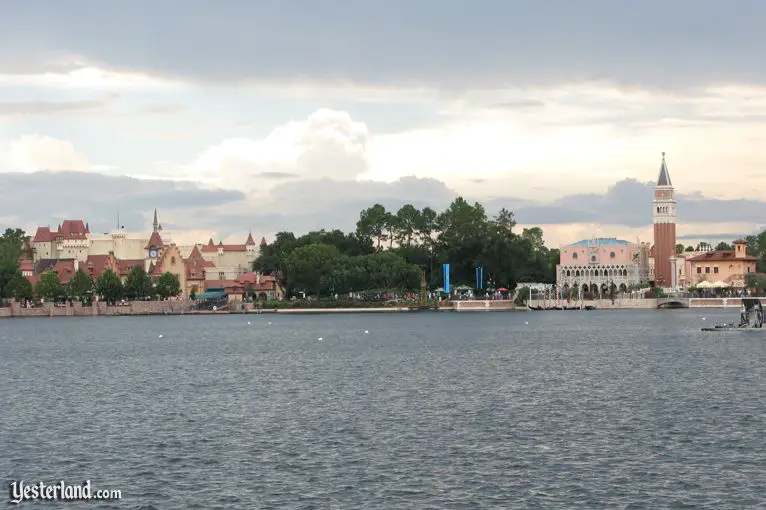
Photo by Werner Weiss, 2009 Trees between Germany and Italy, corresponding to parcel 3 on the map |
|||
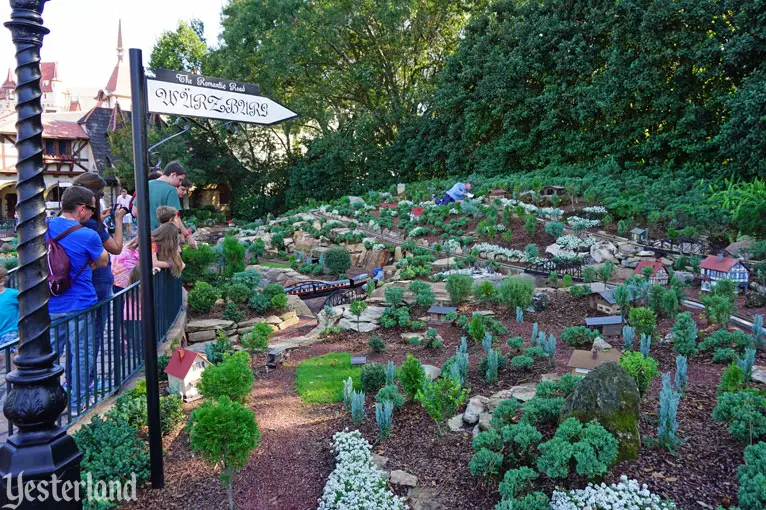
Photo by Werner Weiss, 2016 Outdoor model railroad adjacent to Germany |
|||
|
Germany includes a large outdoor model railroad. There are always people watching the trains and admiring the German village and countryside with its miniature landscaping. It’s the closest thing to an attraction at the Germany Pavilion. But it’s not really part of the Germany Pavilion site. Think of the railroad layout as filler—ready to be bulldozed if the site is needed for another pavilion. |
|||
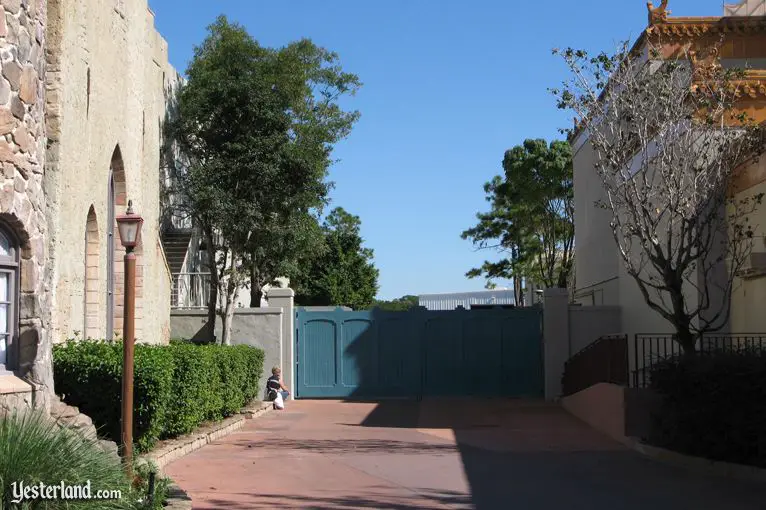
Photo by Werner Weiss, 2008 Norway (left) and China (right), adjacent to each other |
|||
|
Until 2016, there was only one case of two international pavilions abutting—Norway and China, separated by only a service road. That changed when the Norway Pavilion expanded into the site between it and the Mexico Pavilion. |
|||
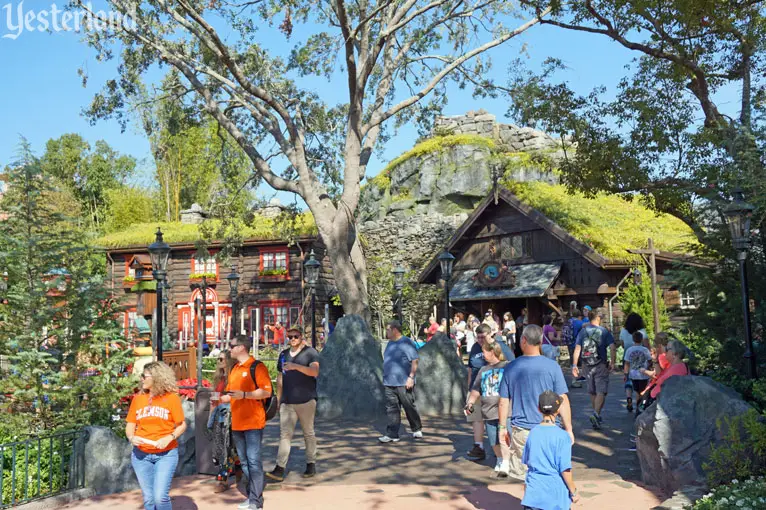
Photo by Werner Weiss, 2016 Norway expansion between Mexico and Norway |
|||
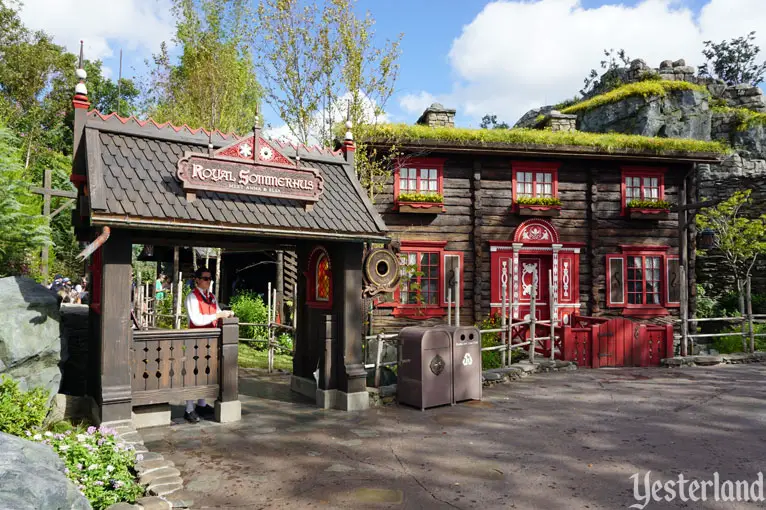
Photo by Werner Weiss, 2016 Royal Sommerhus, an elaborate meet-and-greet with Anna and Elsa from Frozen |
|||
|
With the construction of the Ratatouille ride, the France Pavilion now abuts the Morocco Pavilion—but not along the World Showcase Promenade. So, as the diagram shows, site 5 is still available for a new full-width (but not full-depth) pavilion. |
|||
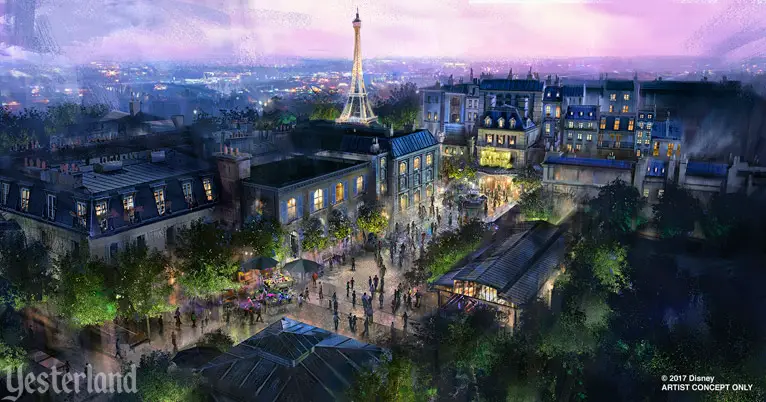
Artist concept, 2017 © Disney Somewhat fanciful rendering of an expanded France Pavilion |
|||
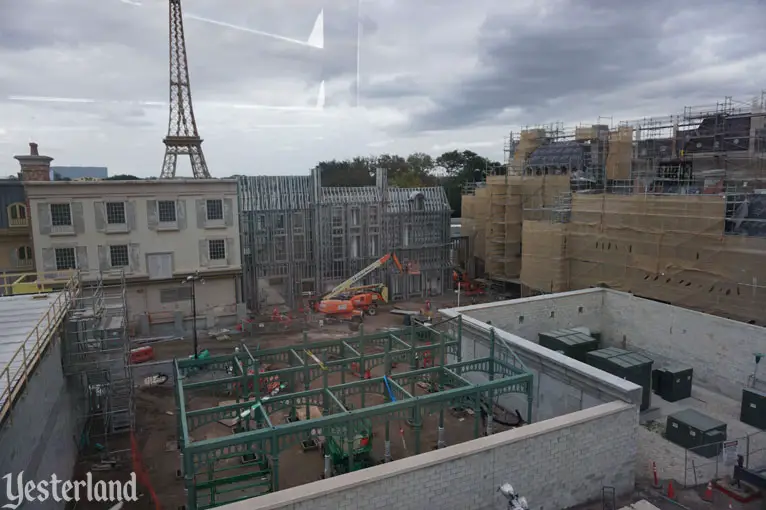
Photo by Werner Weiss, 2019 France Pavilion expansion under construction |
|||
|
Neither expansion represents a new country—unless someone wants to argue that the fictional Kingdom of Arendelle qualifies. At the D23 Destination D Amazing Adventures event in 2016, Bob Chapek, Chairman of Walt Disney World Resort Disney Parks, announced that Epcot would see a “major transformation,” becoming “more Disney, timeless, relevant, family-friendly,” while maintaining the “original vision.” This seems to translate to an infusion of additional Disney content, without abandoning the international theme. It will be an interesting balancing act between the traditional permanent World’s Fair aspect of Epcot and this new “Fantasyland on the Lagoon” approach. No matter what happens, there’s room for more pavilions. |
|||
|
|
|||
|
We now get to the second myth. When Internet discussions arise about why World Showcase has not seen a new country pavilion since 1988, it’s not unusual for someone to point out that World Showcase pavilions are each funded by the corresponding national government, but that Disney has been unsuccessful at getting more governments onboard. |
|||
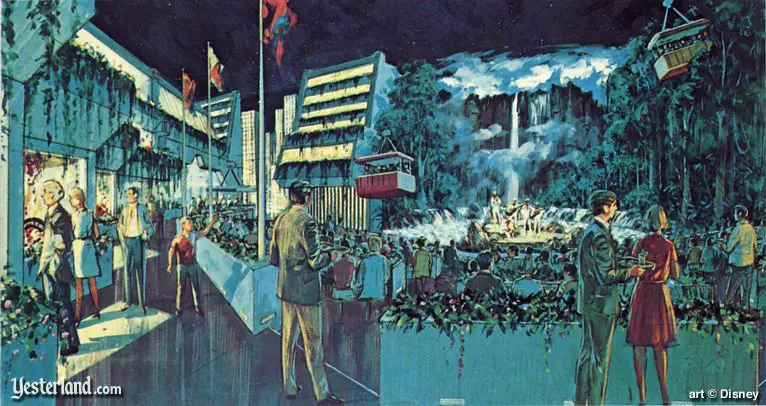
Concept rendering from 1976 Annual Report of Walt Disney Productions © Disney The 1976 Annual Report of Walt Disney Productions included concept artwork for Venezuela. |
|||
|
EPCOT Center opened in 1982 with nine pavilions at World Showcase. Do you know how many were paid for by a national government? Zero. That’s right. Zero. That’s not how Disney originally envisioned it. |
|||
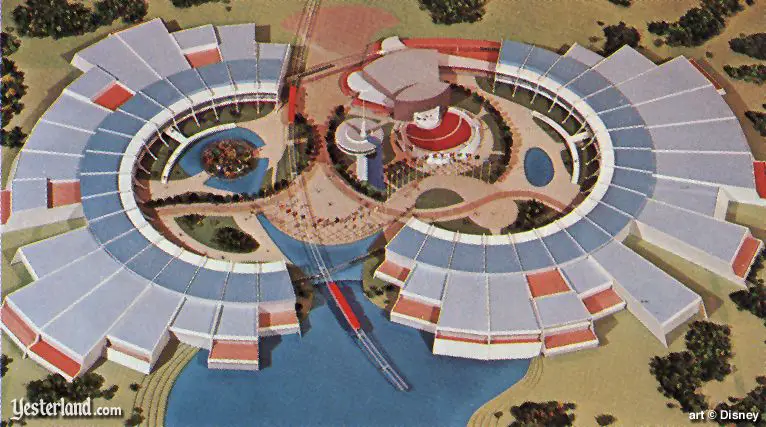
Concept midel from 1975 Annual Report of Walt Disney Productions © Disney World Showcase as two semi-circular buildings, in the 1975 Annual Report of Walt Disney Productions |
|||
|
Here’s an excerpt from the 1975 Annual Report to the shareholders of Walt Disney Productions describing World Showcase: Beyond the scientific and technological aspects of EPCOT the project holds great promise for the advancement of international cooperation and understanding. The World Showcase, planned for opening in late 1979, will be devoted to this goal. An on-going international exposition, for which an admission will be charged, the World Showcase will communicate the culture, heritage, history, technology, trade, tourism and future goals of the participating nations. It will consist of a coordinated series of national pavilions housed side-by-side in two dramatic, semi-circular structures. These dynamic structures will face each other across a Courtyard of Nations, where there will be a major theater for performances by international celebrities and entertainment groups, and where parades, pageants and special events will be staged by entertainers from the participating nations. Although these national pavilions may vary in size, each will enjoy equal facade exposure to the guest. The entire complex will be tied together by a Disney people-moving system that will offer visitors a preview look into each attraction. Unlike a world’s fair, it will offer participating countries a permanent installation for such features as themed restaurants and shops, product exhibits, industrial displays, cultural presentations, a trade center, and even special facilities for business meetings. A major part of each pavilion will be a Disney-designed ride or attraction which will give guests a foretaste of an actual visit to the country. National musical groups or other performing artists could present special entertainment on a continuing basis. Yes, Disney wanted “participating countries.” And the countries would see value in spending money to participate, right? After all, countries around the world funded participation in world’s fairs—such as the huge Expo ’67 in Montreal—which normally run for less than one year. |
|||
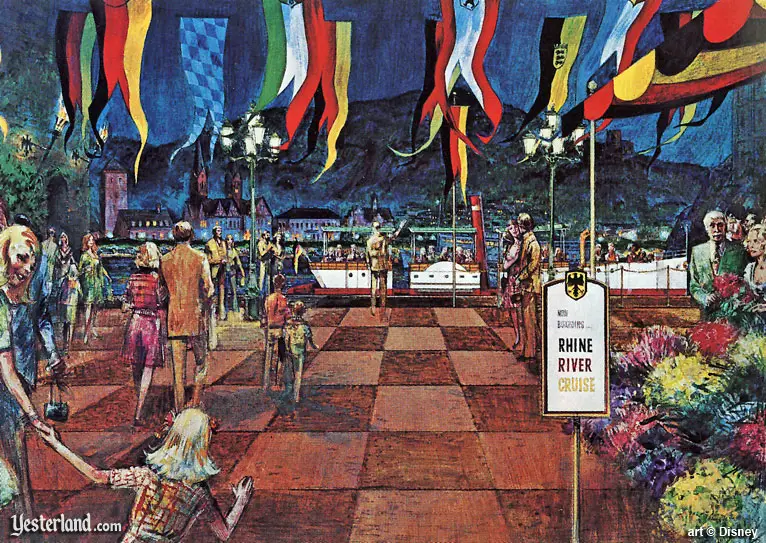
Concept rendering from 1976 Annual Report of Walt Disney Productions © Disney Rhine River Cruise from 1976 Annual Report of Walt Disney Productions—no major sponsorship, no ride |
|||
|
Here’s another excerpt from the 1975 Disney Annual Report: Each participating nation will be asked to provide the capital to cover the cost of designing, developing and constructing its attraction and/or ride and all exhibits, as well as the Pavilion itself. It will also have the responsibility for funding the housing for its employees in the International Village. Its land lease will cover the cost of maintaining the attraction for a minimum of ten years. The Disney organization will be responsible for area development, including the construction of transportation systems and utilities. We will also build and operate the internal people moving system, the Courtyard of Nations and central theater facility. World Showcase opened as part of EPCOT Center in 1982, not 1979. |
|||
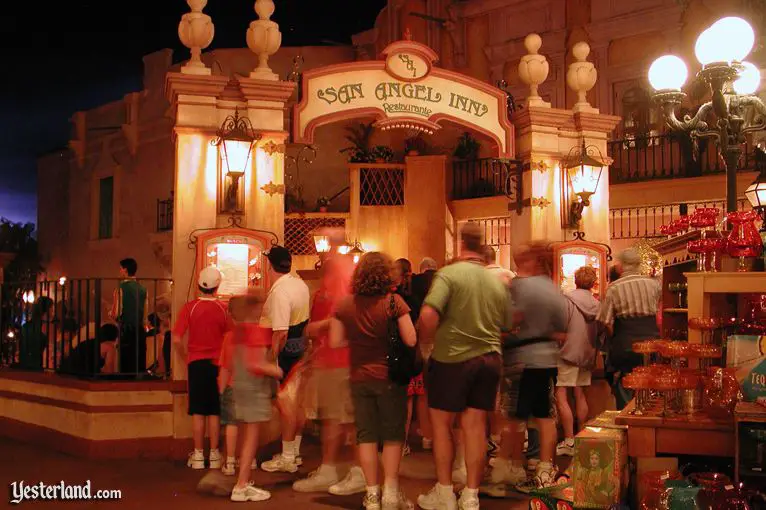
Photo by Werner Weiss, 2006 San Angel Inn, one of the two original “participants” for the Mexico Pavilion |
|||
|
World Showcase was not entirely without financial participants—although some pavilions were. Instead of national governments, the participants were businesses—ones that hoped to sell merchandise, meals, beer, or wine to guests. Here’s the list from 1982:
The American Adventure: American Express, Coca Cola |
|||
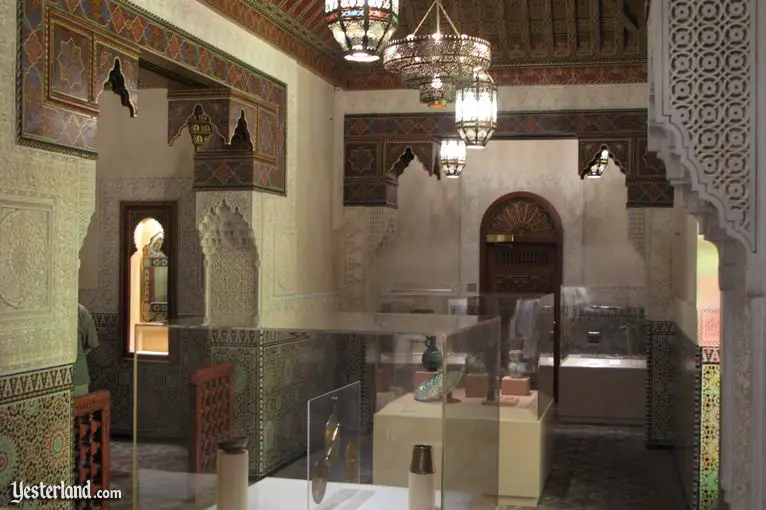
Photo by Werner Weiss, 2007 Morocco Pavilion, the only World Showcase pavilion funded by a foreign country |
|||
|
Having now refuted that foreign governments paid for the World Showcase pavilions, we arrive at the one exception. In 1984, the Morocco Pavilion opened. King Hassan II of Morocco saw an opportunity to share his country’s culture with Americans. He sent a small army of skilled artisans to create incredible interiors. Until fall 2020, the pavilion and its restaurants were operated by an entity set up by the Kingdom of Morocco—but that entity couldn’t weather the COVID-19 pandemic. Disney took over operations in December 2020. |
|||
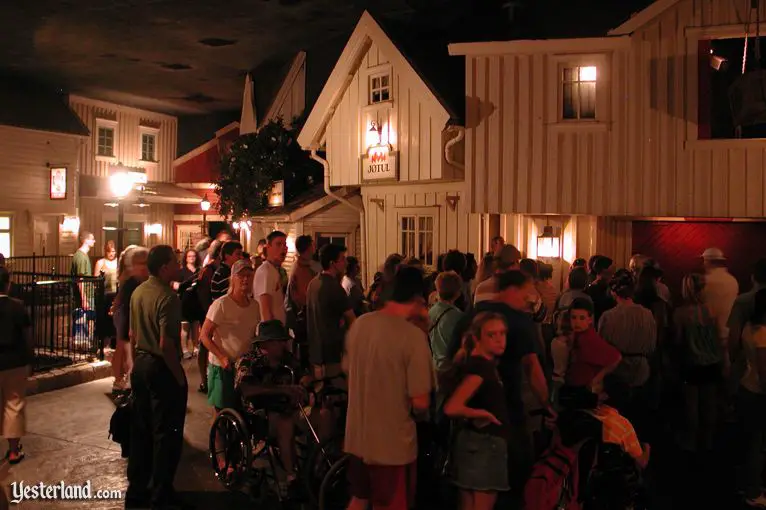
Photo by Werner Weiss, 2007 Waiting area between the Maelstrom ride and the film The Spirit of Norway, with sponsor names |
|||
|
At the time of the opening of the Norway Pavilion in 1988, an article in the Orlando Sentinel (“Norway Pavilion Opens—Without Viking Ride” by Vicki Vaughan, June 2, 1988) provided a rare glimpse into the sponsorship details. Here is an excerpt: Norwegian Showcase USA A/S, also called NorShow, is a consortium of 11 companies established to pay for the pavilion and represent Norwegian interests. The Norwegian government also helped pay for the pavilion. NorShow president Gunnar Jerman said his company contributed $33 million for the pavilion. The figure includes a $2 million contribution from the Norwegian government and an $8 million government loan to NorShow. Disney would not reveal the total cost of the pavilion. The company incurred costs because Disney Imagineering designed and built the pavilion. Jerman said NorShow will share any profit from sales of food and souvenirs. The first $3.2 million in profit will go to NorShow, he said, and the next $400,000 to Disney. After that, NorShow will keep 60 percent of all profit and Disney, 40 percent. As you just read, the Norwegian government kicked in some money, but it was primarily a business consortium. |
|||
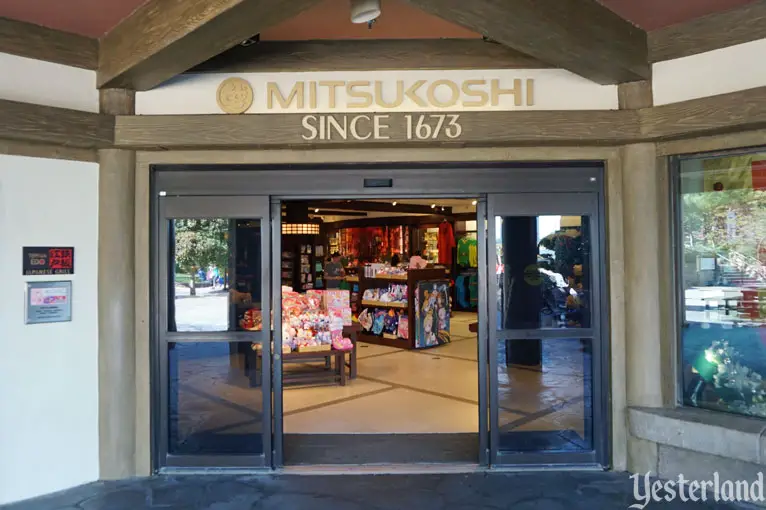
Photo by Werner Weiss, 2016 Japan Pavilion, sponsored by Mitsukoshi, Inc. since the opening of EPCOT Center |
|||
|
Over the years, publicly released artwork has shown Spain, Israel, Equatorial Africa, Russia, Denmark, Costa Rica, Iran (going back to when the Shah of Iran was in power), United Arab Emirates, Switzerland, and probably some others. Supposedly, the Swiss-based multinational food conglomerate Nestlé S.A. was to have sponsored a pavilion about Switzerland, complete with a Matterhorn Bobsleds ride, but instead took over sponsorship of The Land in Epcot’s Future World from Kraft. We can also assume that Disney has tried to work out other business cases to expand World Showcase, without showing artwork outside a small group with a “need to know.” Apparently, Disney has never come up with a compelling business case when the capital cost and ongoing costs of a new pavilion are compared to the revenue from participant fees and rents, guest spending in the pavilion, increased Epcot attendance, and the potential for higher hotel yield when there are more reasons to visit Walt Disney World. That seems surprising. |
|||
|
|
Click here to post comments at MiceChat about this article.
© 2010-2020 Werner Weiss — Disclaimers, Copyright, and Trademarks Updated December 30, 2020 |
||
 , Curator of Yesterland, December 30, 2020


