|
General Electric Publicity Photos General Electric Carousel of Progress at Disneyland |

|
||||

|
In 1971, Dennis Caswell, a California teenager, wrote to the General Electric Company about the General Electric Carousel of Progress at Disneyland. General Electric mailed a portfolio of six black-and-white photographs to Dennis. Here, for your pleasure, are those six photographs. |
|
|||
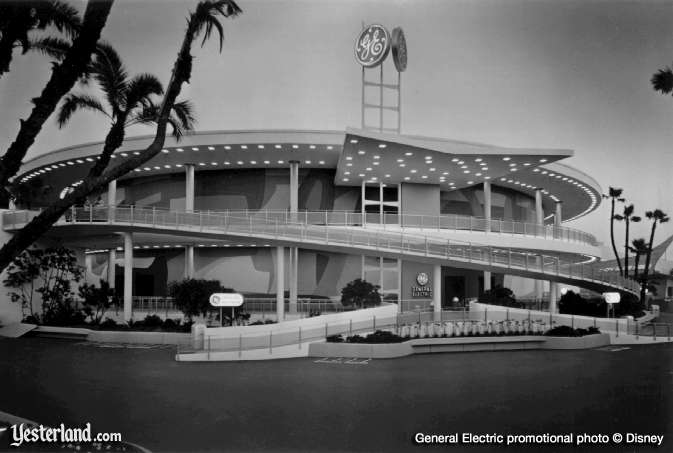 Carousel Theater |
|||||
|
At Disneyland, the Carousel Theater was a two-level structure. On the lower level, an outer ring consisting of six theaters revolved around a core of stationary stages. The theaters made one sixth of a revolution after each act of the show. The upper level remained stationary. The former Carousel Theater is now Innoventions. |
|||||
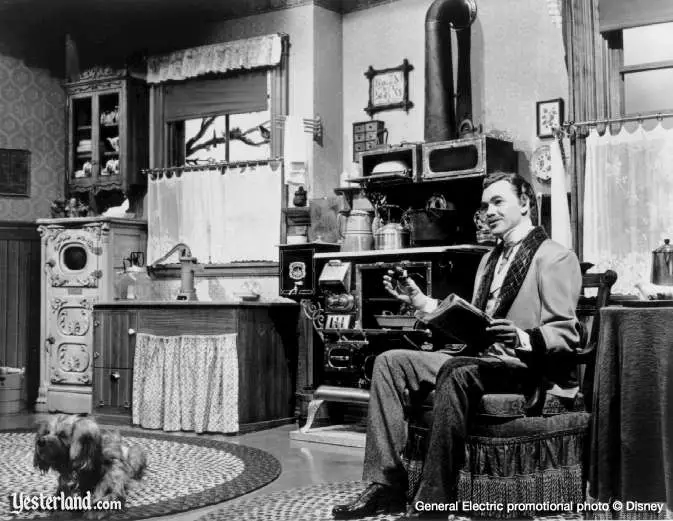 Act 1 (just before 1900) |
|||||
|
The picture of Act 1, above, shows Father sitting in a kitchen without any electric appliances or electric lighting. As you look at the four pictures of Father on this page, take a look at how he’s sitting in each act. Think about how sophisticated and revolutionary the audio-animatronic cast of the Carousel of Progress seemed to audiences in the 1960s. |
|||||
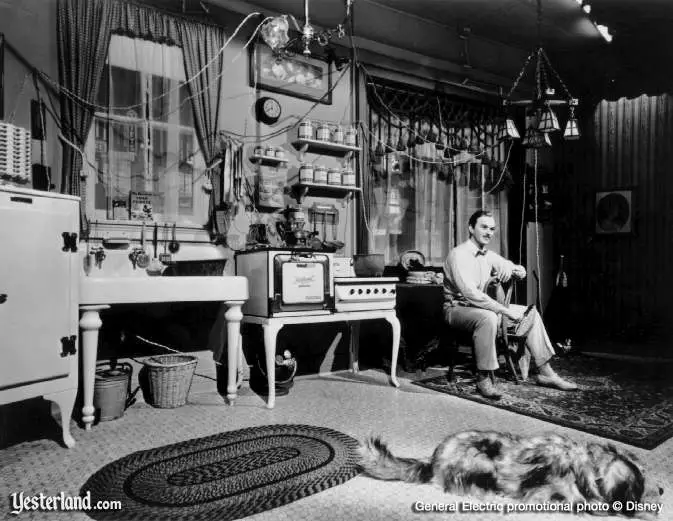 Act 2 (twenty years later) |
|||||
|
In Act 2, Father is again sitting in the kitchen—but now there are electric appliances and electric wires all over the place. When Father explains, “we can run as many wires as we need in any direction for mother’s new electrical servants,” the lights dim and the wires glow in bright colors. |
|||||
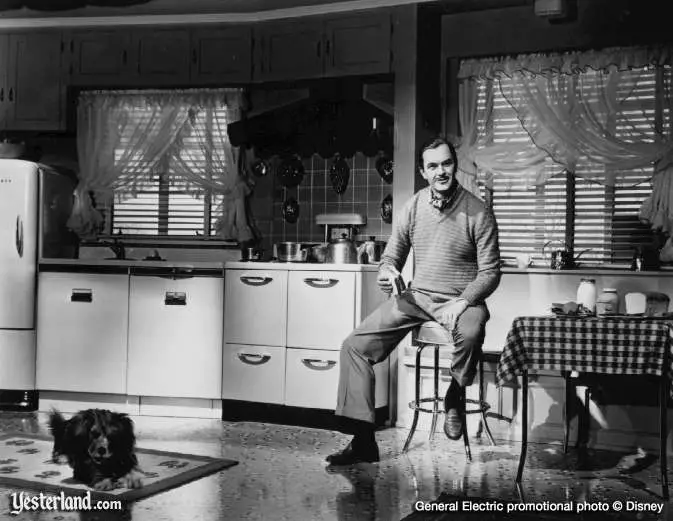 Act 3 (the 1940s) |
|||||
|
When Disneyland guests during the 1960s looked at the kitchen of the 1940s in Act 3, many of them saw a kitchen that looked much like what they had at home. The sponsor was making a not-so-subtle point that it was time to go to a General Electric appliance dealer.
|
|||||
 Act 4 (some time beyond 1967) |
|||||
|
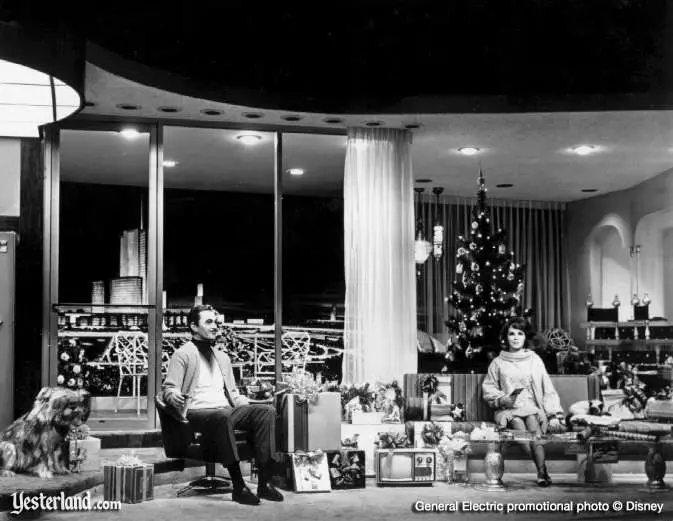
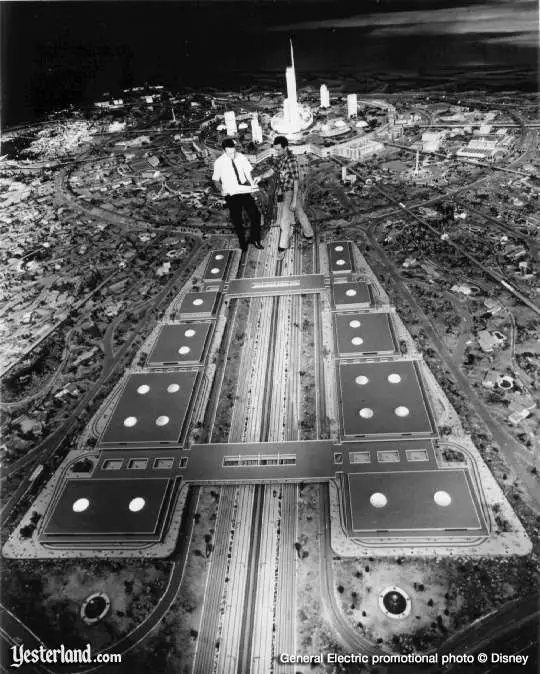
If you’ve been to Walt Disney’s Carousel of Progress at the Magic Kingdom in Florida, you’ll notice that this picture of Act 4 and the current Act 4 in Florida have little in common except that it’s Christmas time in both cases. The view of Progress City through the picture window is just a painted backdrop. When the attraction’s guests arrived at the sixth position, a Speedramp took them up to the second level of the Carousel Theater to see to the spectacular model of Progress City—the final act of the Carousel of Progress at Disneyland. |
|||||
 Progress City |
|||||
|
The Progress City publicity photo, above, is a bit puzzling. During the actual Carousel of Progress show, there were no human cast members walking around Progress City like super-Godzilla-sized monsters. The people in the publicity shot are probably there to provide a frame of reference to show off the vast size and scope of Progress City. When the attraction moved to Florida, this final act ceased to be part of the show. The purpose of any publicity pictures is to make you want to see more. So now please visit the General Electric Carousel of Progress at Yesterland. Before you go, I have a secret—at least a secret if you don’t read the fine print at the bottom of Yesterland’s Carousel of Progress page. The pictures of Act 1, Act 2, and Act 3 on that page were taken at the Magic Kingdom in Florida because I didn’t have any amateur photos of the Carousel of Progress at Disneyland. Act 1 and Act 2 are very similar to the publicity photos here, but Father in Act 3 is quite different. Take a look and you’ll see what I mean. |
|||||
© 2007-2008 Werner Weiss — Disclaimers, Copyright, and Trademarks Updated June 6, 2008. All photos on this page are publicity/promotional photos from General Electric, courtesy of Dennis Caswell. Photos © Disney. |
|||||


